Word Tonic Newsletter
What is Word Tonic?
Word Tonic is a global copywriting community and learning platform founded by Gen-Z copywriter Carolyn McMurray. Word Tonic strives to educate and empower young people interested in a writing career, and connect Gen-Z copywriters with like-minded peers in the industry.
Carolyn is a proud advocate of non-traditional career paths and prioritizes personality, authenticity, and transparency over professionalism. Carolyn's over-the-top public persona forms the basis of the Word Tonic brand, fostering a community of unapologetically weird creatives.
TOV: Loud, bratty, a little bit of a hot mess, unapologetically weird, conversational
The Newsletter
Word Tonic is a paid membership-based community and education platform. Members pay a monthly fee and gain access to the community's Discord, the main hub for the briefs, masterclasses, and other resources offered by Word Tonic.
Members also receive a weekly newsletter containing additional copywriting tips and resources, as well as community highlights and reminders on upcoming masterclasses, monthly challenges, and other opportunities exclusively available to Word Tonic members.
My goal as a newsletter writer was to make the newsletter more than just an educational resource. Previously, the newsletter felt like a nice "add-on" to the Word Tonic membership, not a core part of it. Through incorporating user-generated content and interactive community engagement campaigns, I turned the weekly newsletter into a vital part of the Word Tonic experience. Now, it plays a key role in keeping the membership connected and engaged.
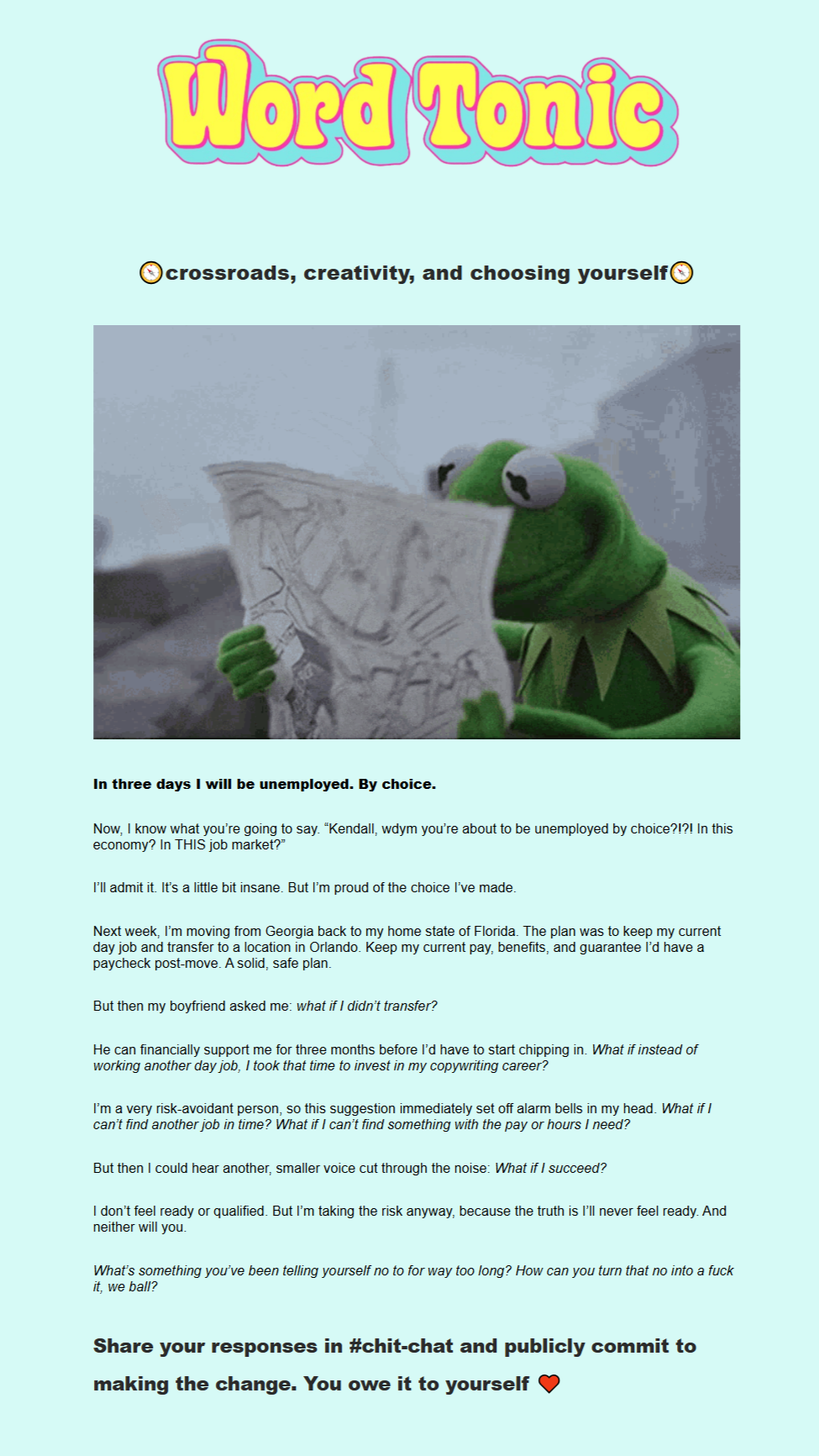
Engagement Prompts
I like to begin each newsletter with a personal anecdote from my week that connects to my copywriting or creative journey, providing a little bit of reflection and inspiration to members. These anecdotes also let readers get to know the human behind the newsletter.
I always end the introductory section with a "Chit-Chat Bridge," a question for readers to respond to within the Discord.
Outcomes
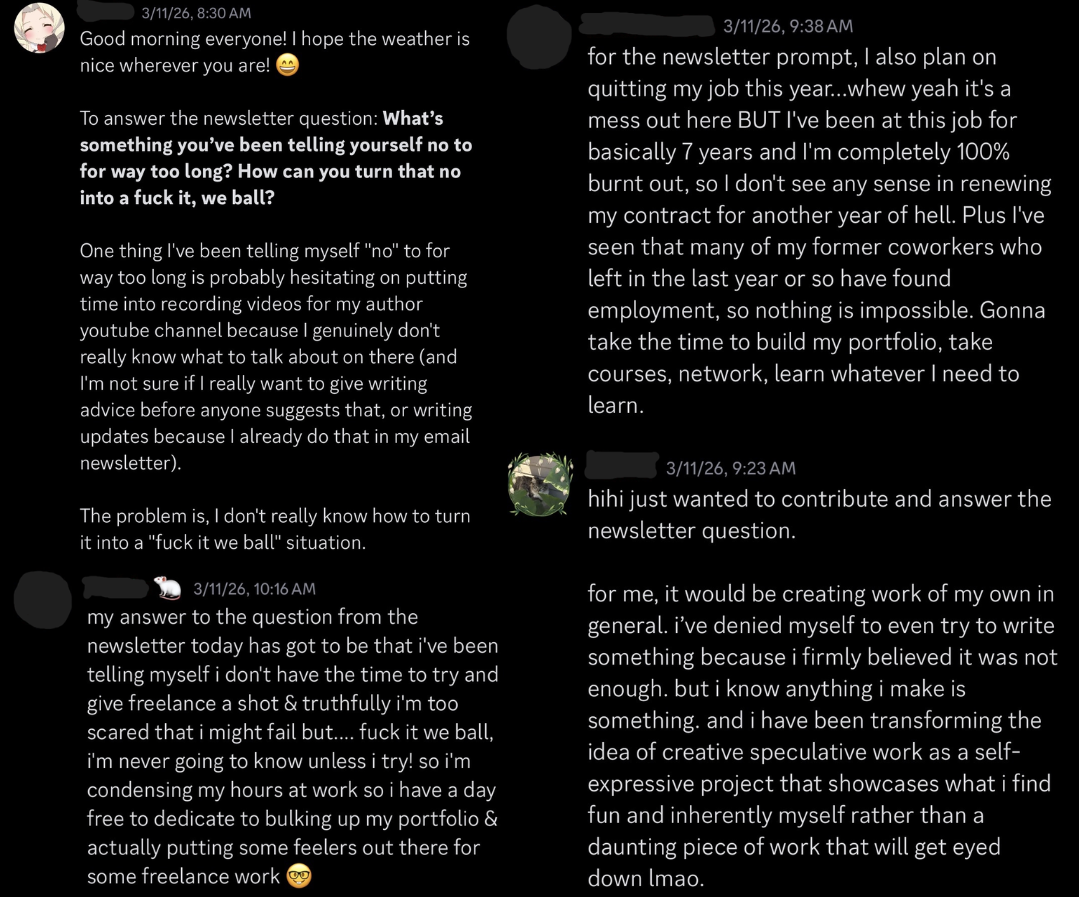
Members consistently respond to the conversational prompt in the Discord, as showcased below.
These conversational prompts allow members to get to know one another and connect on areas of common interest or over shared struggles, fostering a sense of community.
Interactive Campaigns
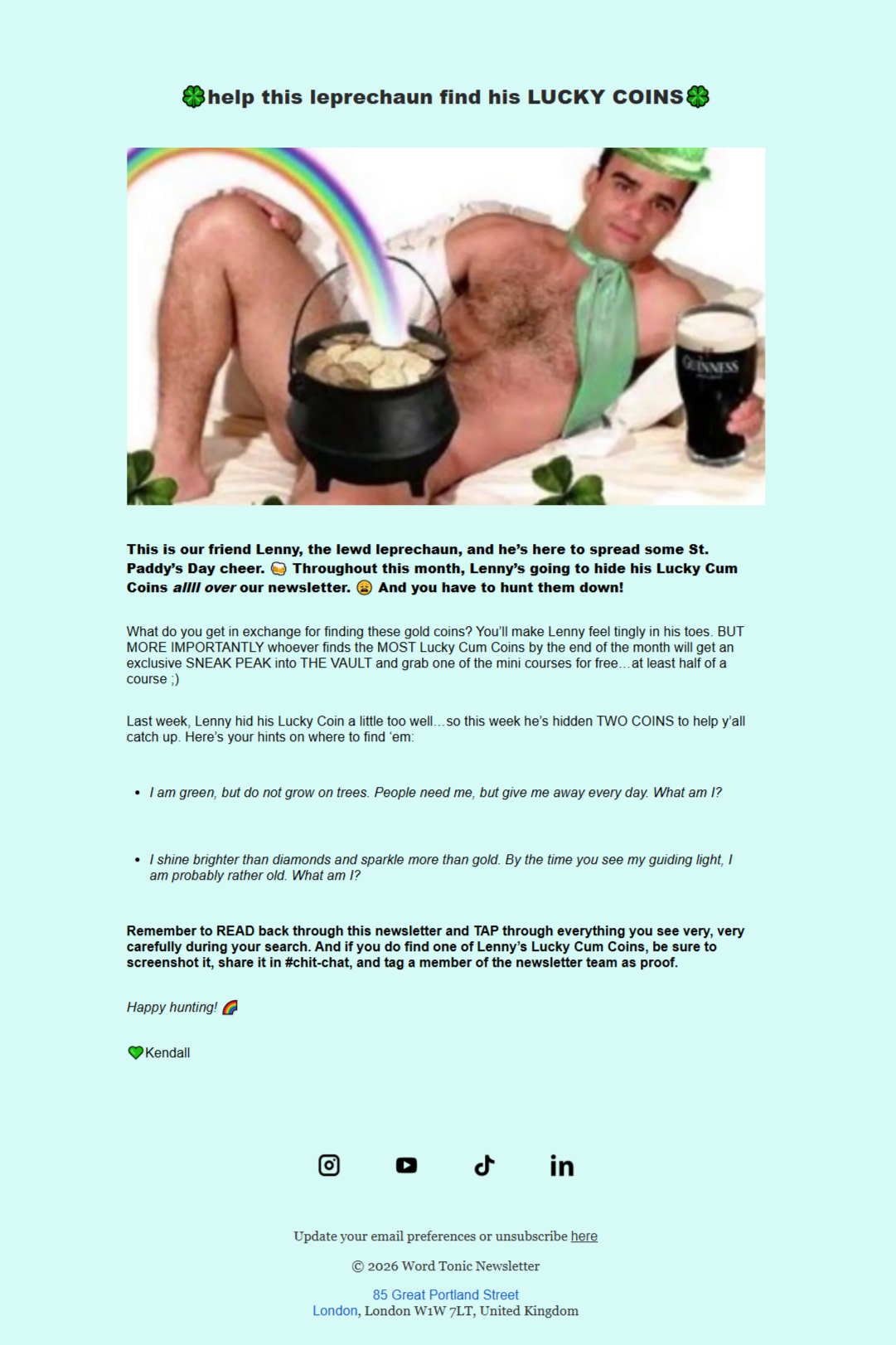
Every month, we facilitate an interactive activity through the newsletter. We've hosted polls for members to vote on their favorite masterclasses and designed puzzles for readers to solve for a chance to win discounts on Word Tonic products. However, our most successful campaign was Lenny's Lucky Coin Hunt.
Lenny's Lucky Coin Hunt ran through the month of March. Links to an image of a gold coin were hidden throughout the newsletter and members were provided a clue in the form of a riddle on where they could find it. Readers were prompted to share a screenshot of the coins they found in the Discord for a chance to win free course materials.
Outcomes
Members loved Lenny's Lucky Coin Hunt. The humorous design of the coins made members inherently want to share them with each other, and for those on the competitive side the prize simply sweetened the pot.
The Coin Hunt got members talking about the newsletter in ways they never had before. People were asking about where to find them, reaching out to us to verify they were on the e-mail list so they could participate, and talking about how funny the coin designs were.
Through Lenny's Lucky Coin Hunt, I generated more than engagement. I created a cultural moment for the Word Tonic community, the kind of cultural moment that converts an engaged audience base into a loyal, cult-like following.
User-Generated Content
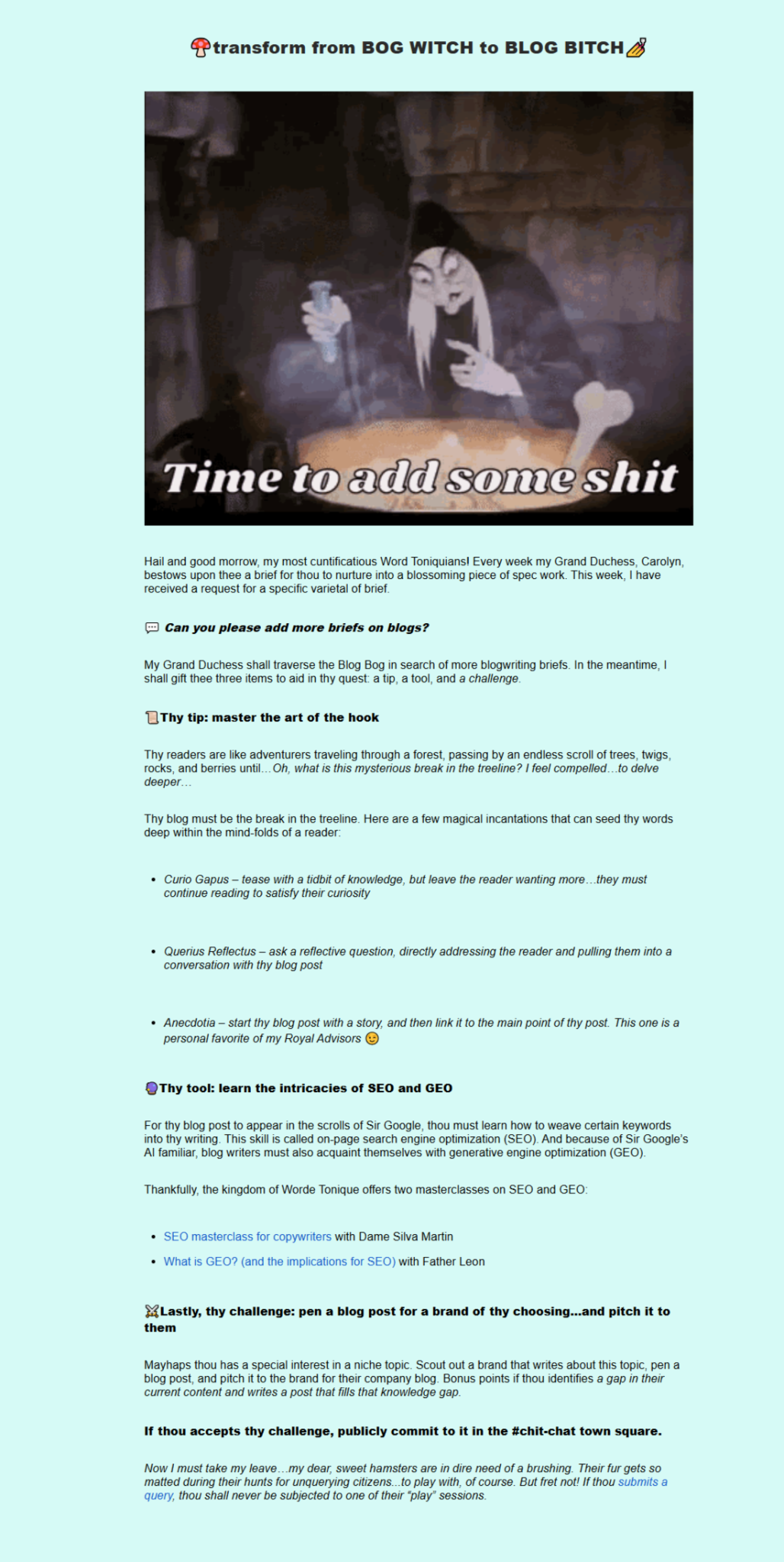
One of the ways I've incorporated user-generated content into the newsletter is through the introduction of an anonymous advice column called Ask the Query Queen.
Ask the Query Queen takes the classic "agony aunt"-style advice column and puts a fantasy twist on it, merging together "ye olde English"-style language with Gen-Z slang...all while still delivering actionable copywriting and career advice.
At the end of every Query Queen entry is a CTA with a link for readers to submit their own questions for the Queen to respond to in future editions.
Outcomes
By adding an anonymous advice column to the newsletter, I've given readers a personal reason to come back each week. If a reader submits a question, they'll check their inbox and scroll through the newsletter to see if their question was answered.
Directly responding to user-submitted questions also ensures that every week we're delivering something of value to our members, because we are literally giving them what they asked for.
With the introduction of Ask the Query Queen, I've increased the perceived value of the newsletter and thus reduced reader drop-off.